The mezuzah is, perhaps, the most symbolic object of Jewish life. Traditionally placed on doorposts of Jewish homes, it has a small scroll inscribed with verses of the Shema prayer, serving as both a mitzvah and daily reminder of spirituality. This beloved object has, over time, been replaced by jewelry-mezuzah pendants and necklaces that enable one to wear the symbol near to their heart.
Unlike the mezuzah on the door, none of these pendants fulfill the mitzvah of mezuzah. They are, instead, symbolic, artistic expressions of tradition, identity and protection. Mezuzah jewelry today blends history, spirituality and fashion, worn by both men and women across the globe.
What Is a Mezuzah Pendant?
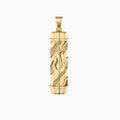
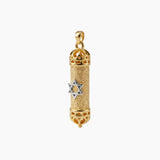
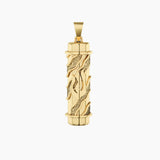
A mezuzah pendant is a piece of jewelry resembling a mezuzah case. They are simple and unadorned; others are elaborate, adorned with Hebrew letters like "ש" (Shin, symbolizing Shaddai, one of the names of God). Though they look like teeny mezuzot, they are not intended to hold a kosher scroll like one that hangs on a doorway.
From mezuzah scrolls to jewelry design
The concept is borrowed directly from the mezuzah scroll and holder that Jews display on their doorways. To translate this object into jewelry allowed the mezuzah to be something more than an object on the entrance of one's house-it became something intimate, close to the body, daily worn as a reminder of faith and tradition.
How a mezuzah pendant differs from a traditional mezuzah
An mezuzah pendant is symbolic, not a substitute for or equivalent of the mezuzah on a doorway. The religious mezuzah must be a hand-written scroll by an ordained scribe (sofer), and therefore it's a sacred object. A pendant, however, doesn't usually contain such a scroll-it's jewelry, derived from the mezuzah, that attempts to have meaning and beauty instead of being an object used to fulfill a commandment.
The Meaning and Symbolism Behind Mezuzah Jewelry
Wearing a mezuzah pendant is more than just a fashion statement. For others, it is an expression of how the mezuzah's meaning can be taken into everyday life.
Why people wear mezuzah pendants
Others wear a mezuzah pendant as an identifier, letting the world know they are Jewish wherever they travel. Others consider it to be protection, just as the mezuzah on the door is believed to bestow blessing upon the home. To some, it's simply a comforting reminder of their religion, kept close at hand.
Mezuzah pendants as symbols of faith and protection
Since ancient times, mezuzah jewelry has been associated with divine protection and strength. The Hebrew character "ש" (Shin) is typically engraved on the pendants to symbolize Shaddai, a name of God. As the mezuzah protects the entrance of a home, the pendant symbolizes carrying this same protection with you wherever you go.
The History of Mezuzah Jewelry
The mezuzah itself is thousands of years old, a root in the Torah directive to "write these words… on the doorposts of your house and on your gates" (Deuteronomy 6:9). But wearing a mezuzah as jewelry is more recent.
Early forms and cultural influences
Jewish individuals have used jewelry for centuries to identify religion-rings with scripture, pendants in the shape of the Star of David, amulets for protection. Mezuzah pendants grew from this tradition of wearing Jewish symbols in jewelry form.
The rise of mezuzah necklaces in modern times
In the 20th century, mezuzah pendants gained particularly great popularity among diaspora Jews and Israelis. They provided a means of combining tradition and personal style, particularly for those who needed to wear an emblem of their heritage away from home. Nowadays, designers produce mezuzah pendants in gold, silver and even contemporary minimalist designs, making them both significant and stylish.





 Mother Of PearlWhat Is Mother of Pearl? Color, Iridescence and Jewelry Design
 Our Craftsmanship Handmade Judaica Jewelry and What to Look For
 Tyferet SymbolThe Tyferet Symbol: A Modern Interpretation of the Star of David
 Jewish JewelryThe Timeless Elegance of Ashkenazi Jewelry: History, Symbolism, and Collecting Guide
 Mixing Gold & SilverThe Modern Guide to Mixing Gold and Silver Jewelry with Confidence
 Jerusalem RingJerusalem Ring: The Eternal City Engraved in Gold and Silver
 Jewish RingThe Hidden Meanings Behind Jewish Ring Inscriptions
 Ani Ledodi JewelryAni Ledodi Jewelry: The Song of Songs Wedding Phrase in Gold & Silver