Why Roman glass needs a different approach
The safest approach to cleaning Tyferet Roman glass jewelry is to keep the glass dry and leave its surface undisturbed. Do not rinse, soak or scrub it. The luminous surface that makes ancient glass so distinctive can be delicate, and a cleaning method suitable for plain gold can damage the material it holds.
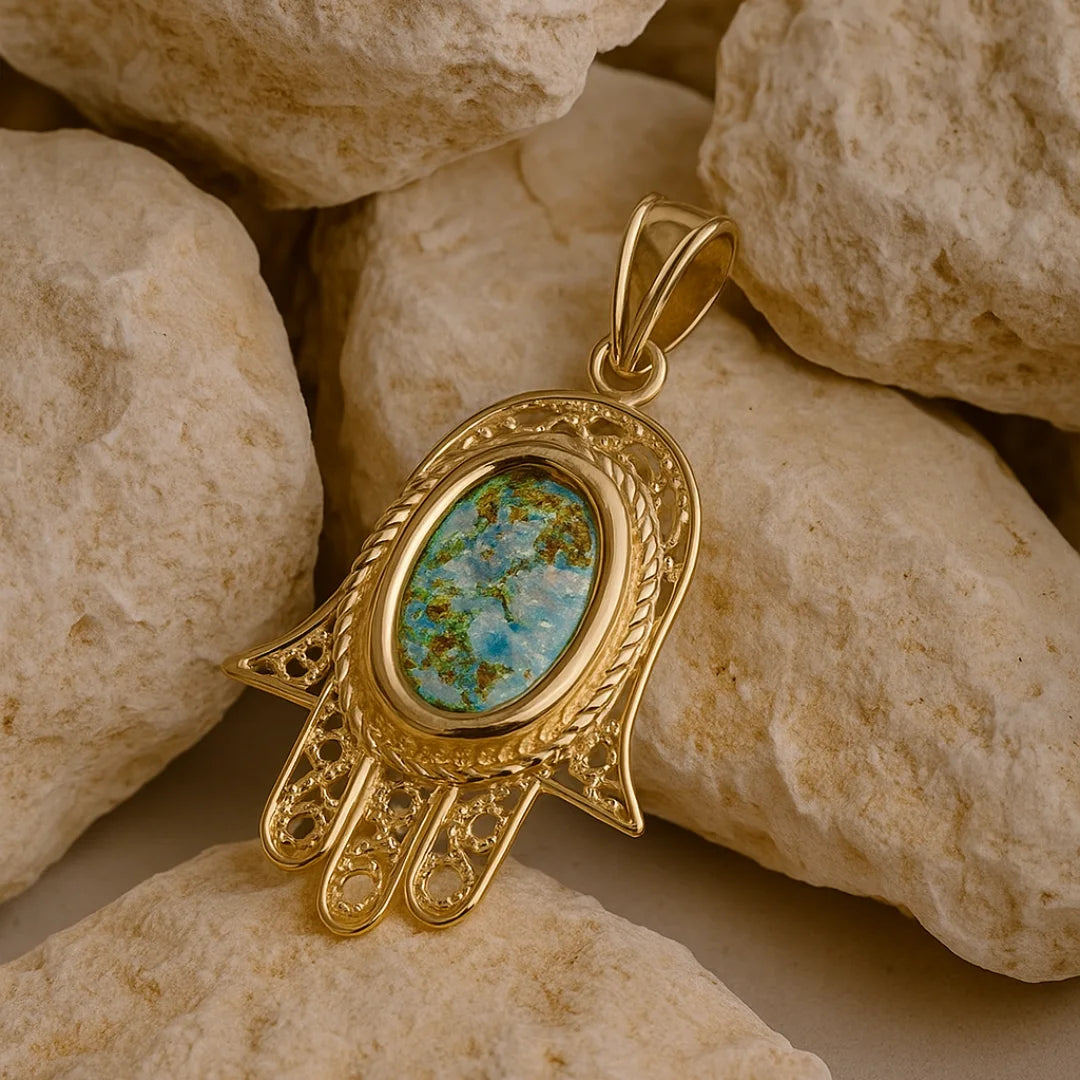
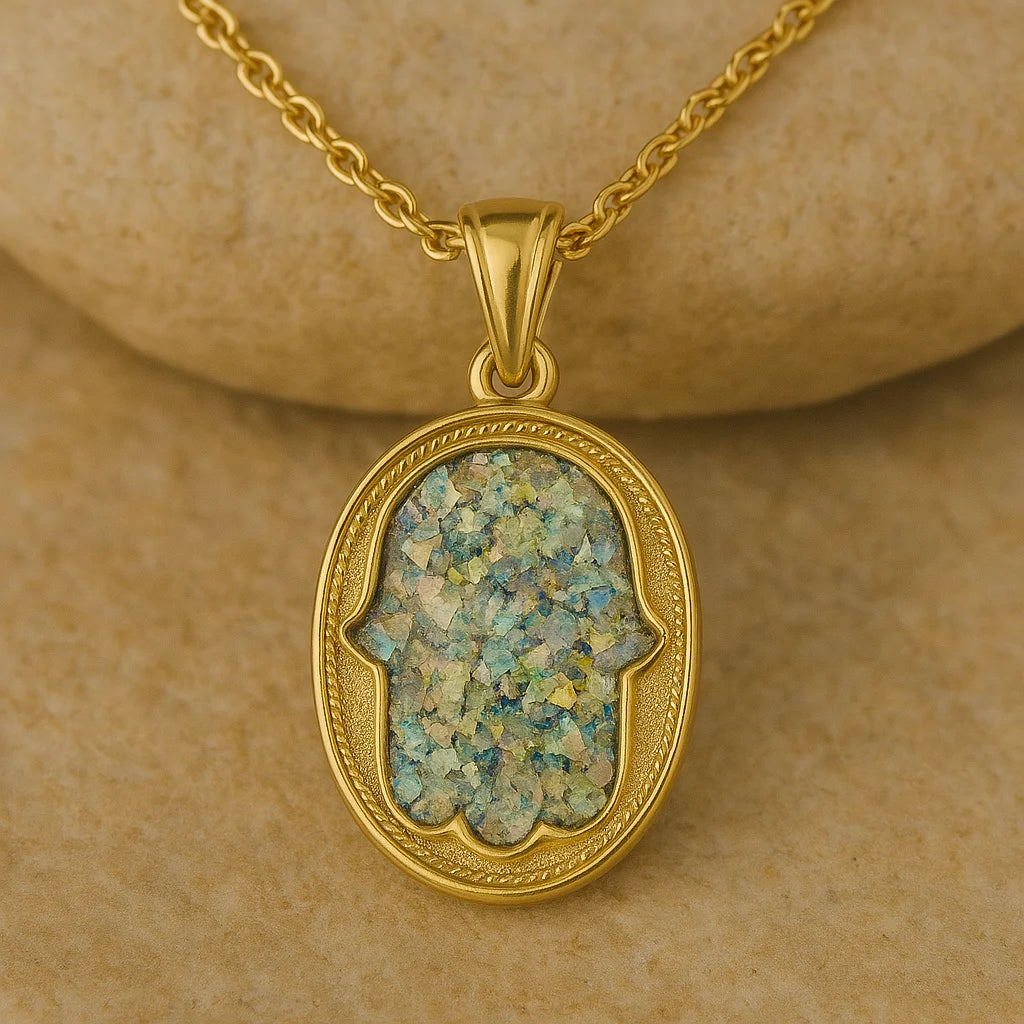
Roman glass connects a contemporary piece of jewelry with an older material. Its irregularities and changing surface colors are part of its character. They should not be treated as dirt to polish away. Surface color can shed, so preserving the appearance begins with avoiding unnecessary contact.
What dry care means
Work over a clean, soft surface and hold the piece by the metal setting where possible. Inspect it without rubbing the glass. You may gently wipe accessible metal with a clean, soft, dry cloth, keeping that cloth away from the ancient surface. Do not pull a cloth through the setting or brush underneath the glass.
If dust, residue or a mark is on the glass itself, ask for piece-specific advice before trying to remove it. Dry care does not mean buffing the glass with a dry cloth. Even without liquid, friction can disturb a vulnerable surface.
Methods to avoid completely
Keep Roman glass away from running water, soaking bowls, soap, alcohol, vinegar and household cleaners. Do not use toothpaste, baking soda, polishing cloths with compounds, brushes, steam or ultrasonic machines. Avoid protective sprays, sealants, nail polish and oils. A home coating can change the surface and is not a solution to its delicacy.
An attached gold chain does not make the whole necklace washable. Only clean a removable chain separately if it can be detached safely without tools or force, and only by a method suitable for that chain. Leave attached components to someone familiar with the complete piece.




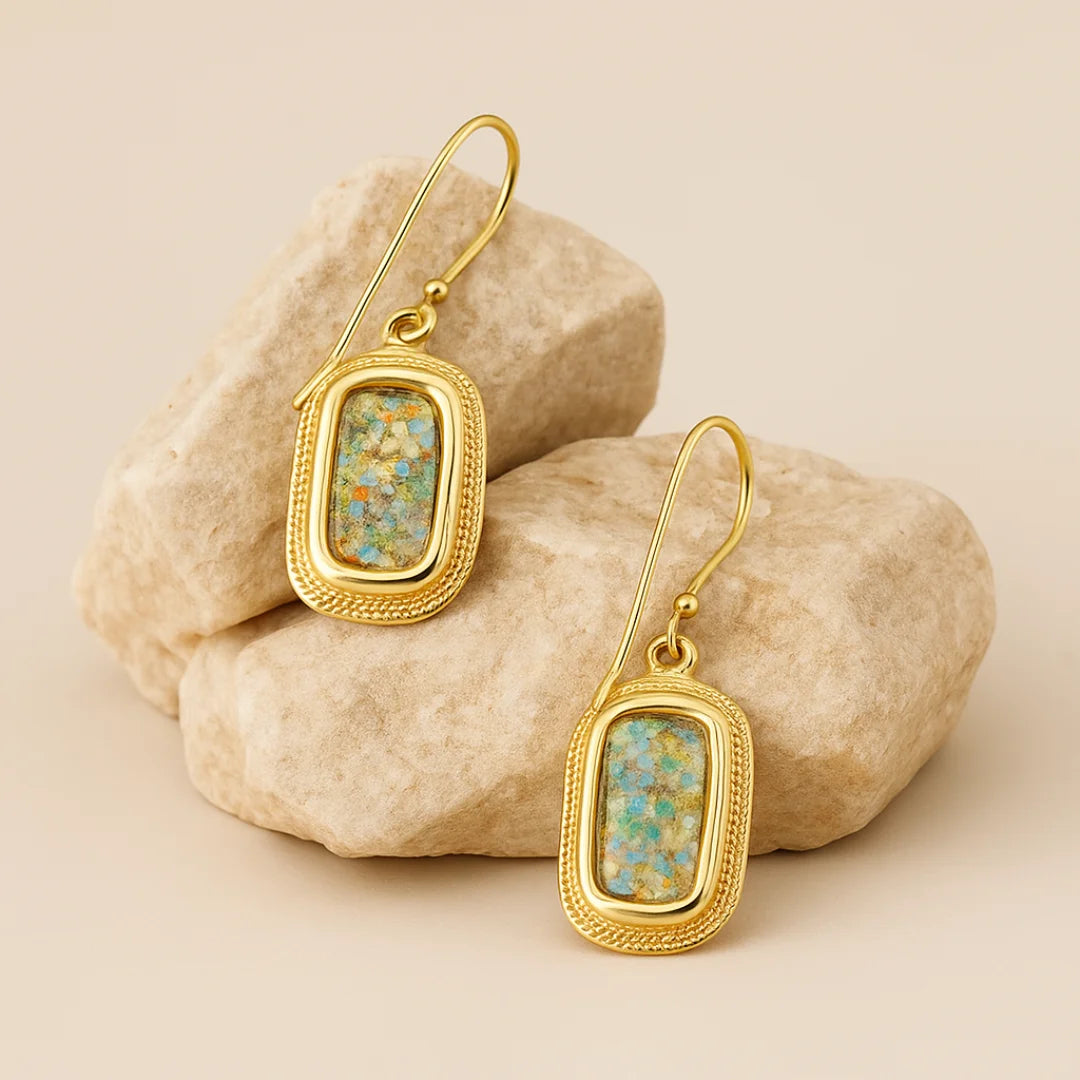
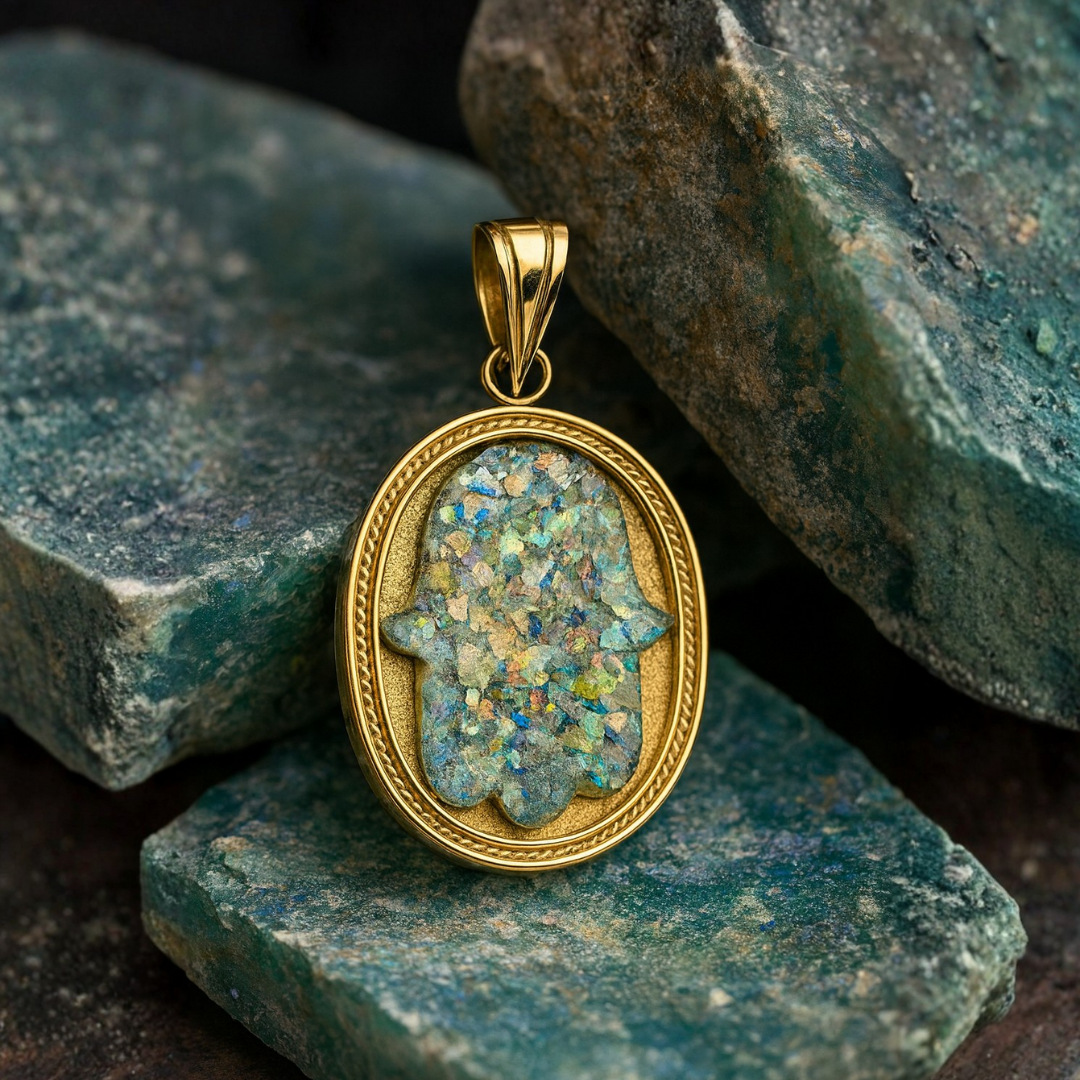
 Prevent scratches and tangles with separate spaces and a consistent daily routine.How to Store Gold Jewelry
 A practical removal routine for gold, gemstones and delicate heritage materials.When to Take Off Your Jewelry
 Remove gold jewelry before showering to protect the complete piece and make care simpler.Can You Shower with Gold Jewelry