
Skip to content

Cart

Your cart is empty

  • Shipping Free Worldwide Express Shipping
  • Secure Payments Safe & Secure Payments

Mother Of Pearl

What Is Mother of Pearl? Color, Iridescence and Jewelry Design
In this article 2 chapters
The material behind the glow

Mother of pearl is nacre: the lustrous material that lines the inside of certain mollusk shells. In jewelry, it provides a surface that can appear softly white or creamy, then reveal subtle color as the light or viewing angle changes. Its appeal is often in that movement, even when the design around it is simple.

Understanding the material helps explain why two photographs can show different impressions of the same piece, and why natural mother of pearl does not have to look uniformly white to be beautiful.

A shell material with a layered structure

Nacre is built from microscopic aragonite tablets, a form of calcium carbonate, arranged with organic material between them. Research into nacre's structure describes this layered lining within mollusk shells. In jewelry, mother of pearl brings that shell material into a shaped decorative element, such as the center of a pendant or ring.

The distinction is useful when reading a product description. Mother of pearl is shell-derived material; calling it a stone informally does not change that origin. It also does not identify the exact shell species or the place from which a particular piece was sourced. Those details need their own product-specific information.

Why the color seems to move

Light interacting with nacre's fine layers produces interference colors. Research on nacre's optical properties connects those colors to its layered structure. The visible effect is iridescence: a change in the colors you notice as the angle of light or your viewpoint changes.

To see the difference between color and iridescence, think about what remains when a piece is still. You may first register a pale overall surface. As it turns, a wash of another hue can become more apparent. That shifting impression is part of the experience of mother of pearl, rather than a single color that a photograph can capture completely.

Is mother of pearl the same as a pearl?

They are related, but the names describe different jewelry materials. Mother of pearl is taken from the nacreous lining of a shell. A pearl forms within a mollusk; natural pearls form without human intervention, while cultured pearls develop through a process initiated with human assistance. GIA explains this distinction in its guide to pearls.

A shaped mother of pearl centerpiece therefore should not be described as a pearl that has been flattened. For the buyer, the useful question is which form you enjoy: the surface and outline of a shell element, or the form of a pearl used as a separate gem.

What to look for in mother of pearl jewelry

Once you know what creates the glow, look at how a design makes room for it. A broad center gives the eye more surface to explore. A small element can make the same material feel like a brief point of light. The surrounding metal changes how clearly the edge stands out.

Read the center and its frame together

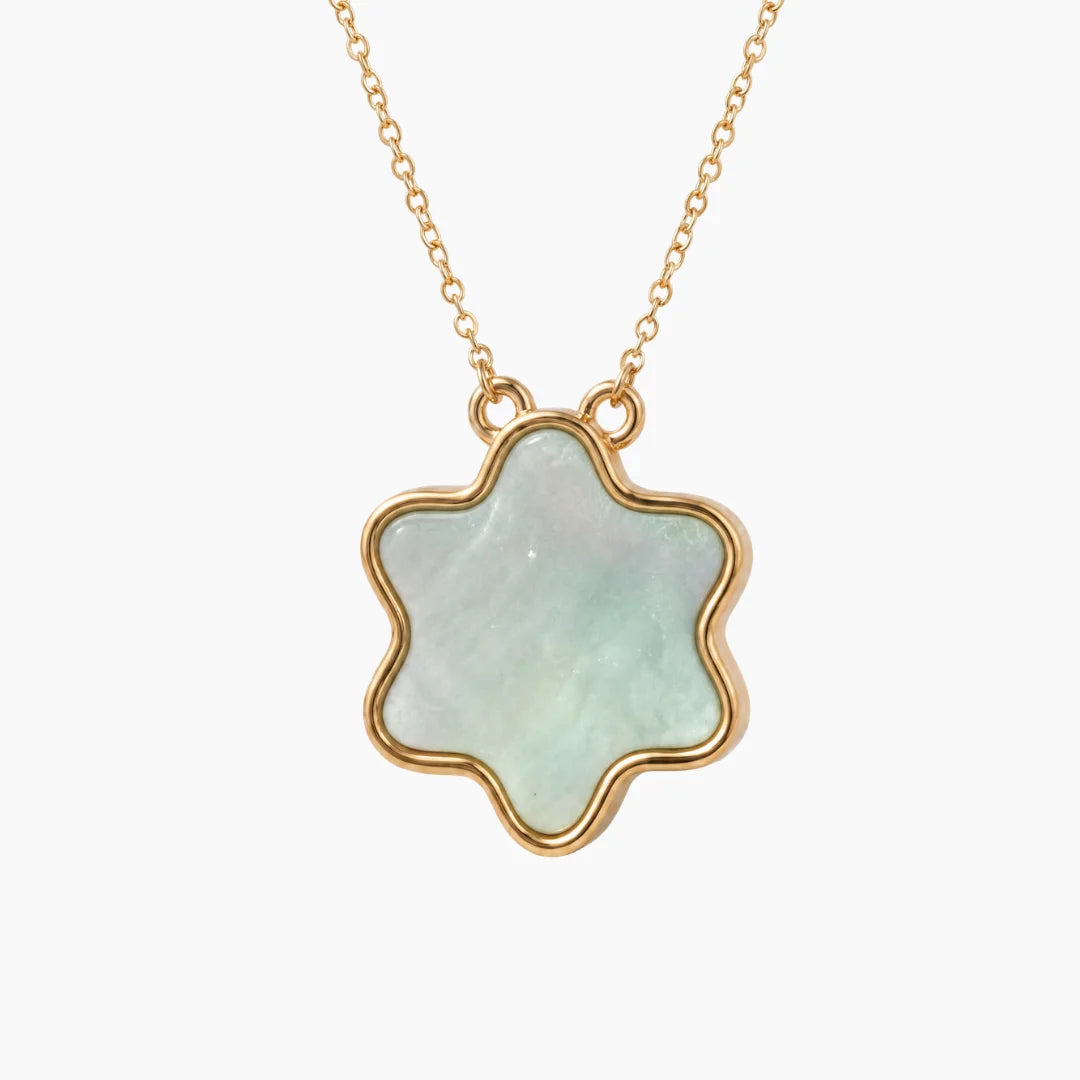
In the Tyferet Symbol Mother of Pearl Necklace, the rounded six-pointed outline frames an uninterrupted center. Your eye can follow the gold edge and then return to the light within it. The material and motif share attention: the outline gives the piece its identity, while the surface keeps it from feeling visually flat.

The current necklace is offered in yellow and white gold. In the gallery images, yellow gold creates a warmer contrast around the pale center; white gold gives the frame and center a closer tonal relationship. These are visual differences to compare, rather than a rule about which combination you should prefer.

Expect individual appearance

Tyferet identifies the mother of pearl in this collection as natural and notes that appearance varies between pieces. Use the product images to understand the design and the general character of the material. A specific band of color or pattern may not appear in exactly the same place in the piece you receive.

Natural variation is not, by itself, an authentication test. A photograph also cannot establish a material's full composition or any treatment history. If a particular source or treatment detail matters to your decision, ask about the exact piece before ordering. The description should do that work; you should not have to infer it from a pale patch in an image.

Choose where you want to see the light

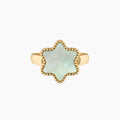
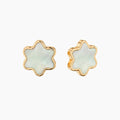
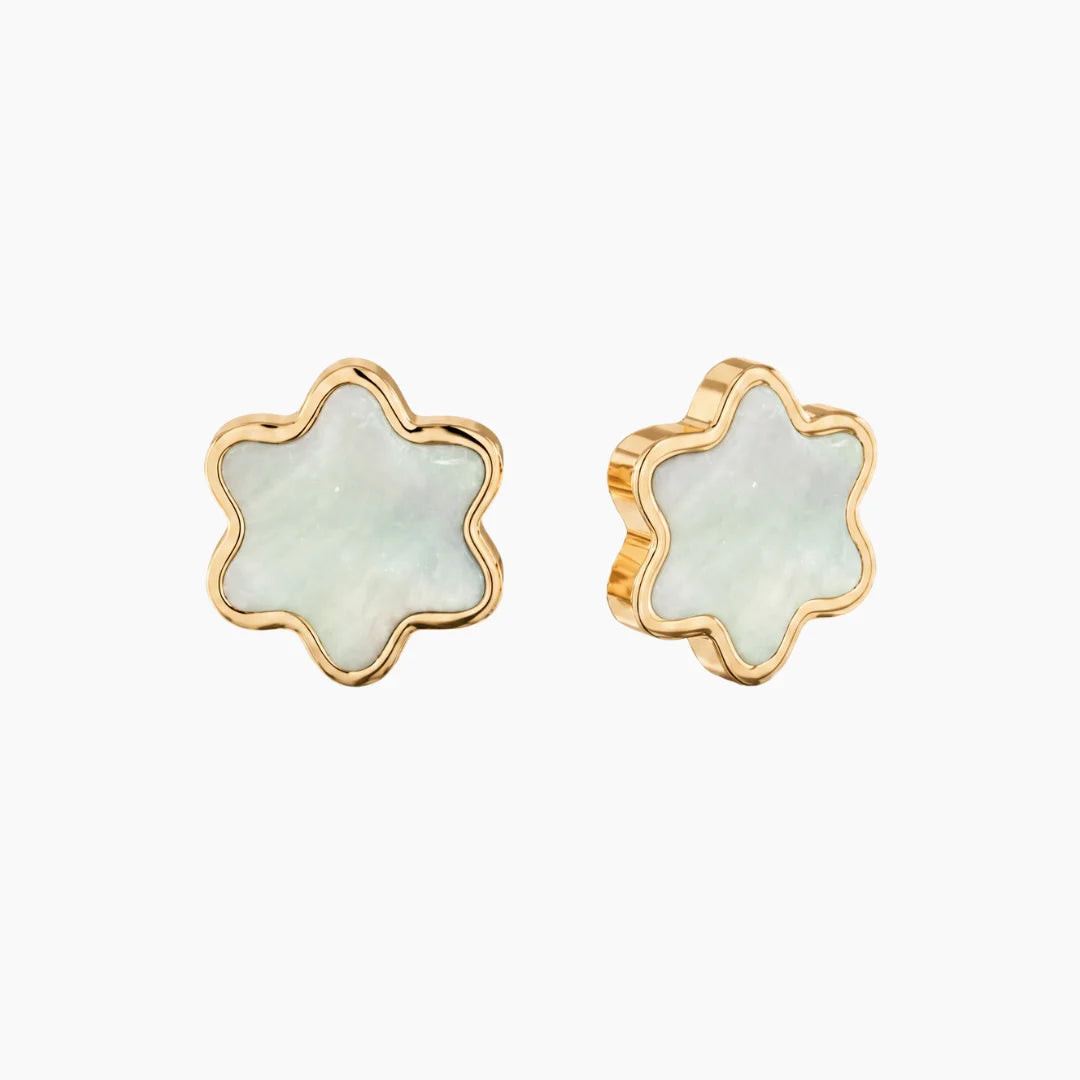
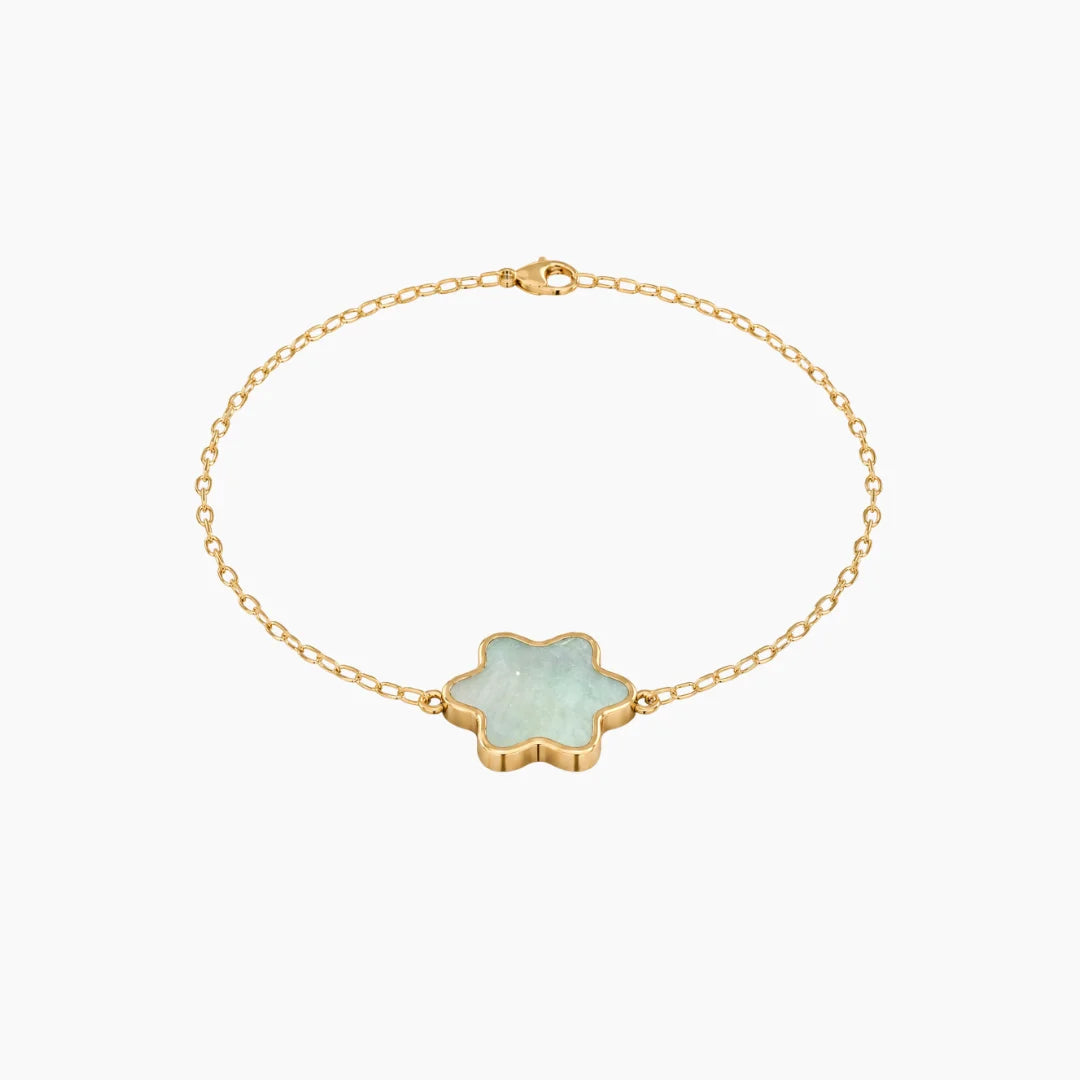
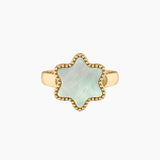
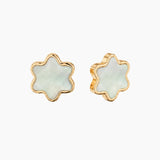
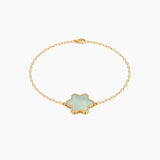
A necklace makes the material part of the neckline. In the Tyferet Symbol Mother of Pearl Earrings, the same outline repeats beside the face. A ring lets you see the surface yourself throughout the day, while a bracelet brings it to the wrist.

If you are choosing your first piece, start with the format you wear most comfortably. There is no need to assemble a complete set to appreciate the material. A single pale motif can sit naturally alongside the jewelry you already own.

Explore the Tyferet Symbol collection to compare those formats. Look first at the silhouette, then the material, then the way the two work together. Mother of pearl rewards that second look: the design stays familiar while the light gives you something slightly different to notice.

Shop the pieces

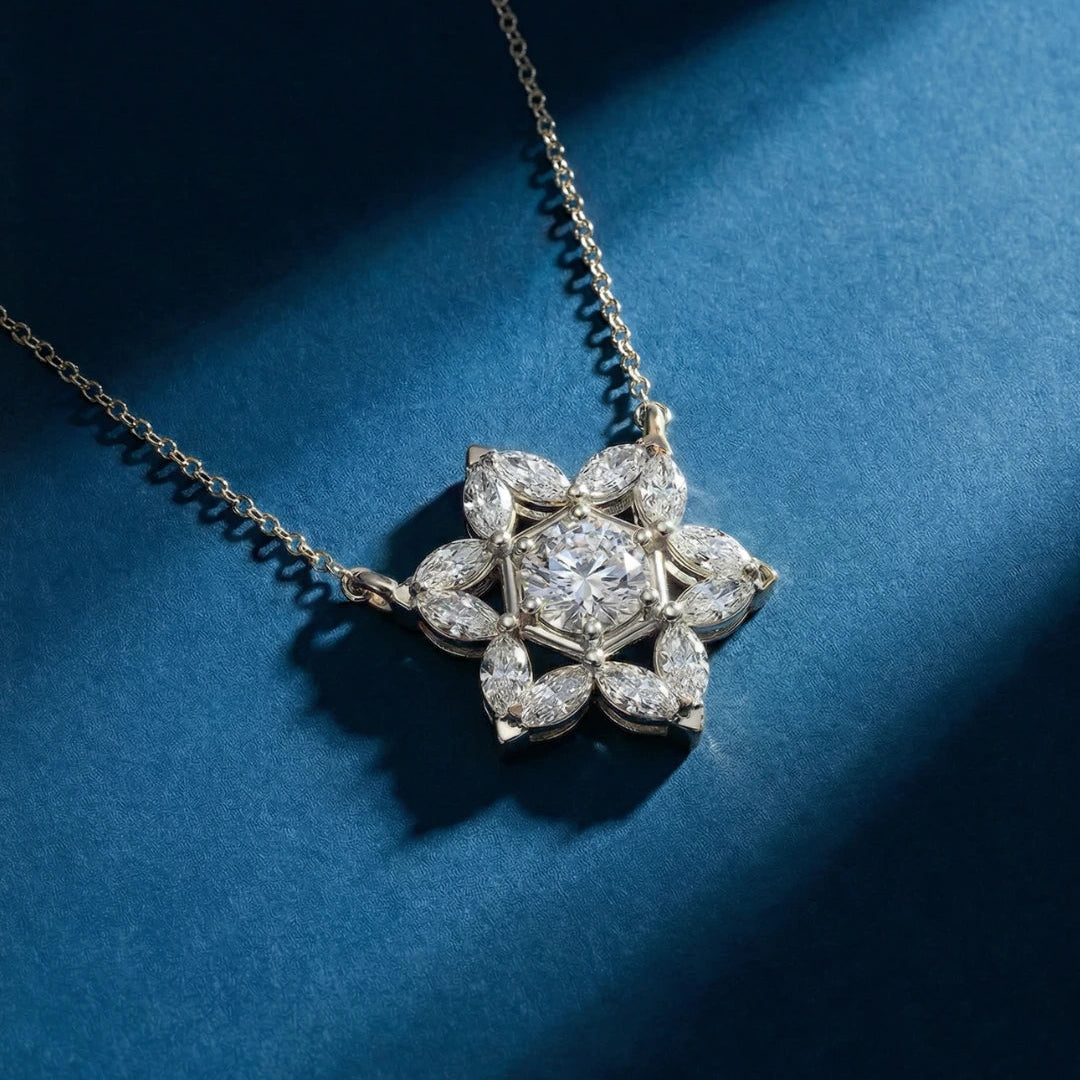
14K Gold - Tyferet Symbol Mother of Pearl Necklace with natural mother of pearl, handcrafted in Israel
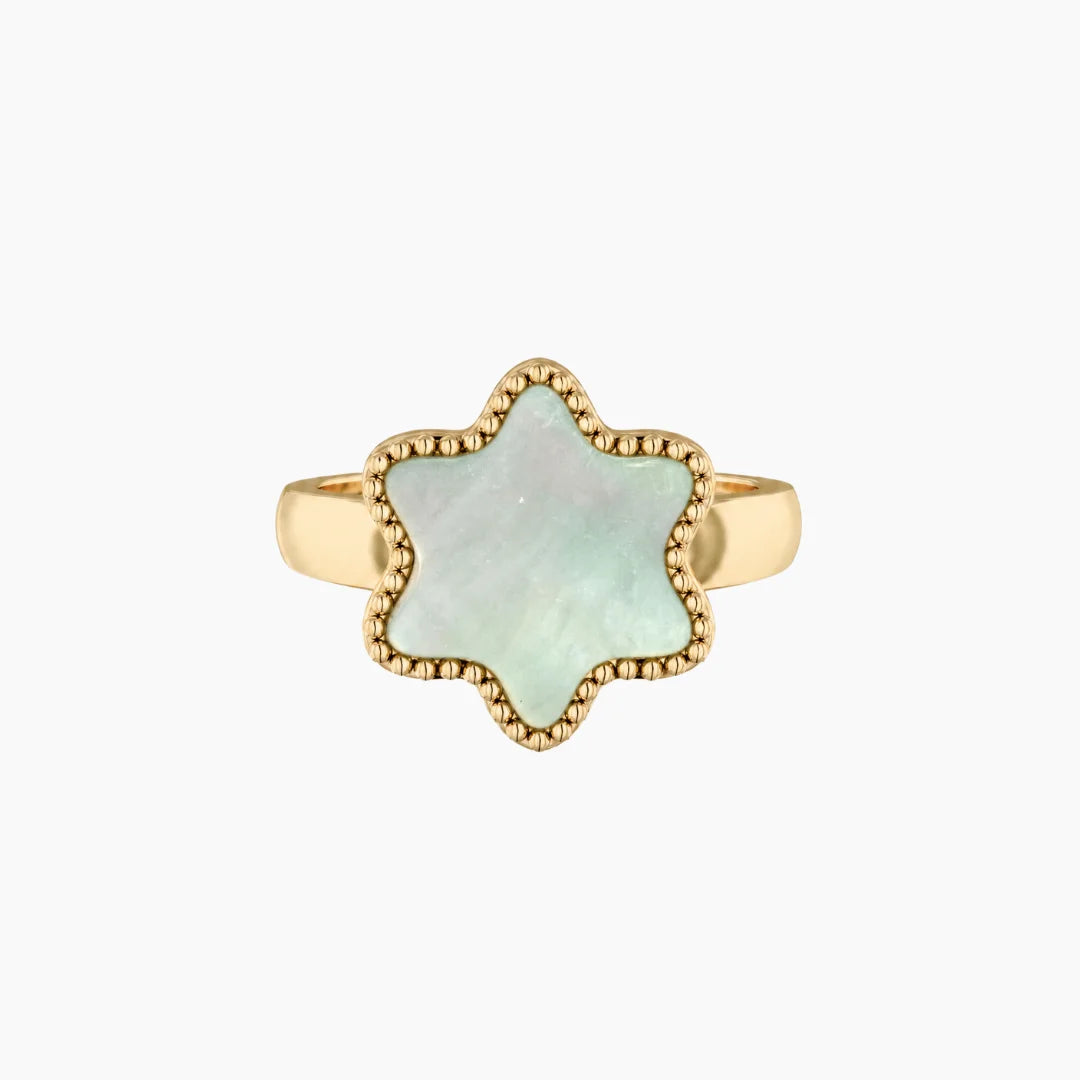
14K Gold - Tyferet Symbol Mother of Pearl Ring with natural mother of pearl, handcrafted in Israel
14K Gold - Tyferet Symbol Mother of Pearl Earrings with natural mother of pearl, handcrafted in Israel
  • Handmade in IsraelEach piece is made by hand
  • Free worldwide express shippingWherever you are in the world
  • Safe & secure paymentsProtected, encrypted checkout
  • Chat with an advisorHelp choosing a piece, size or metal

Frequently Asked Questions